
Soft Autumn vs Deep Autumn
In soft autumn vs deep autumn, the main difference is depth, which means whether your hair, eyes and skin read light or dark as a set.
The one test that settles it
Which one suits the spot right below your chin better, a gentle oatmeal or a rich dark chocolate brown?
You're Soft Autumn if dusty olive and oatmel tones keep your complexion balanced while that dark chocolate brown drapes your face in harsh shadow.
You're Deep Autumn if deep pine and dark chocolate bring your features to life while oatmeal leaves your face looking drained.
Soft Autumn and Deep Autumn side by side
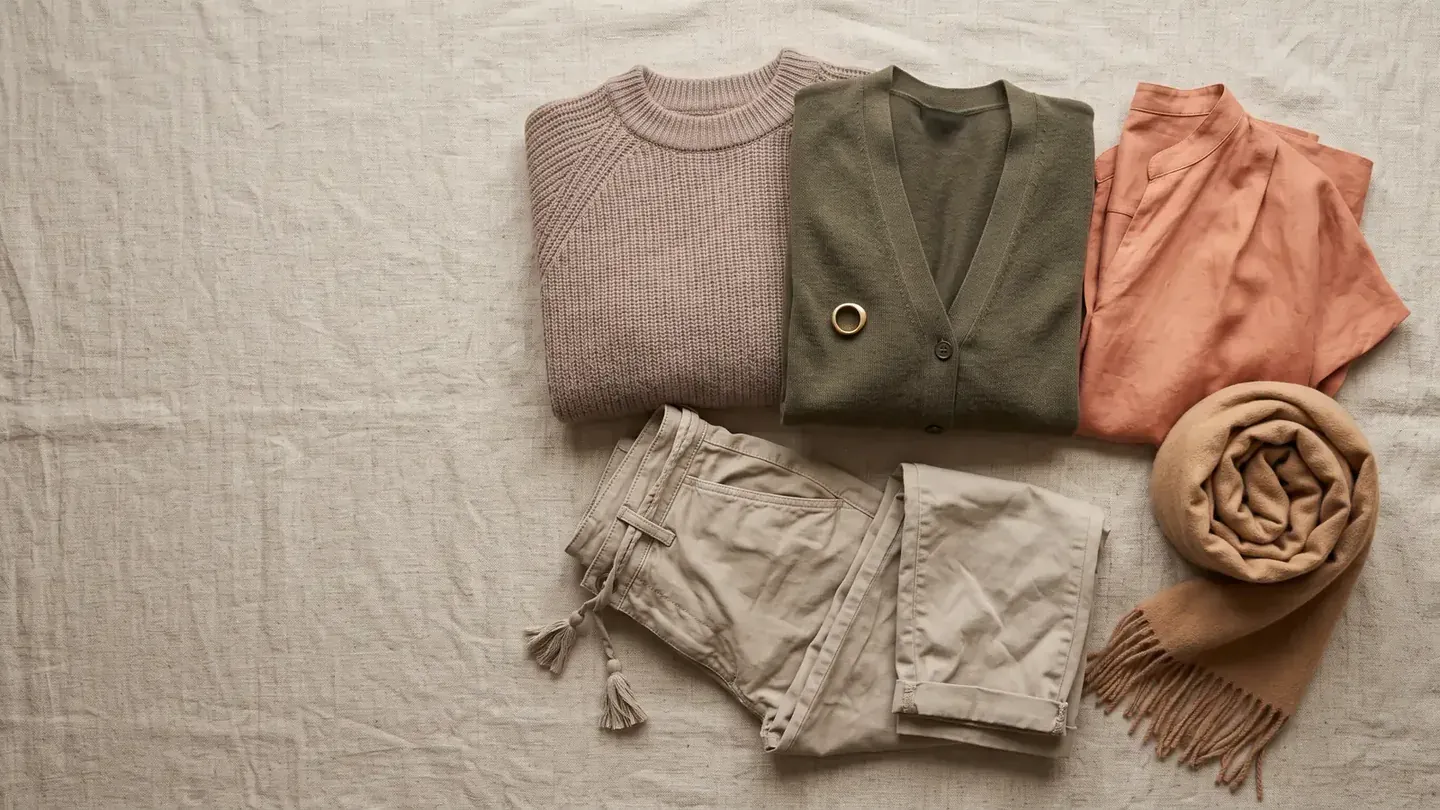
Soft Autumn
Signature colors
- Sage
- Dusty Terracotta
- Rose Brown
- Soft Mustard
- Soft Teal
Skip
- Black#000000
- Magenta#C2009C
- Bright Cobalt#1946E9
- Fuchsia#E10195
- Deep Royal Blue#1E249E
- Burgundy#6E1728
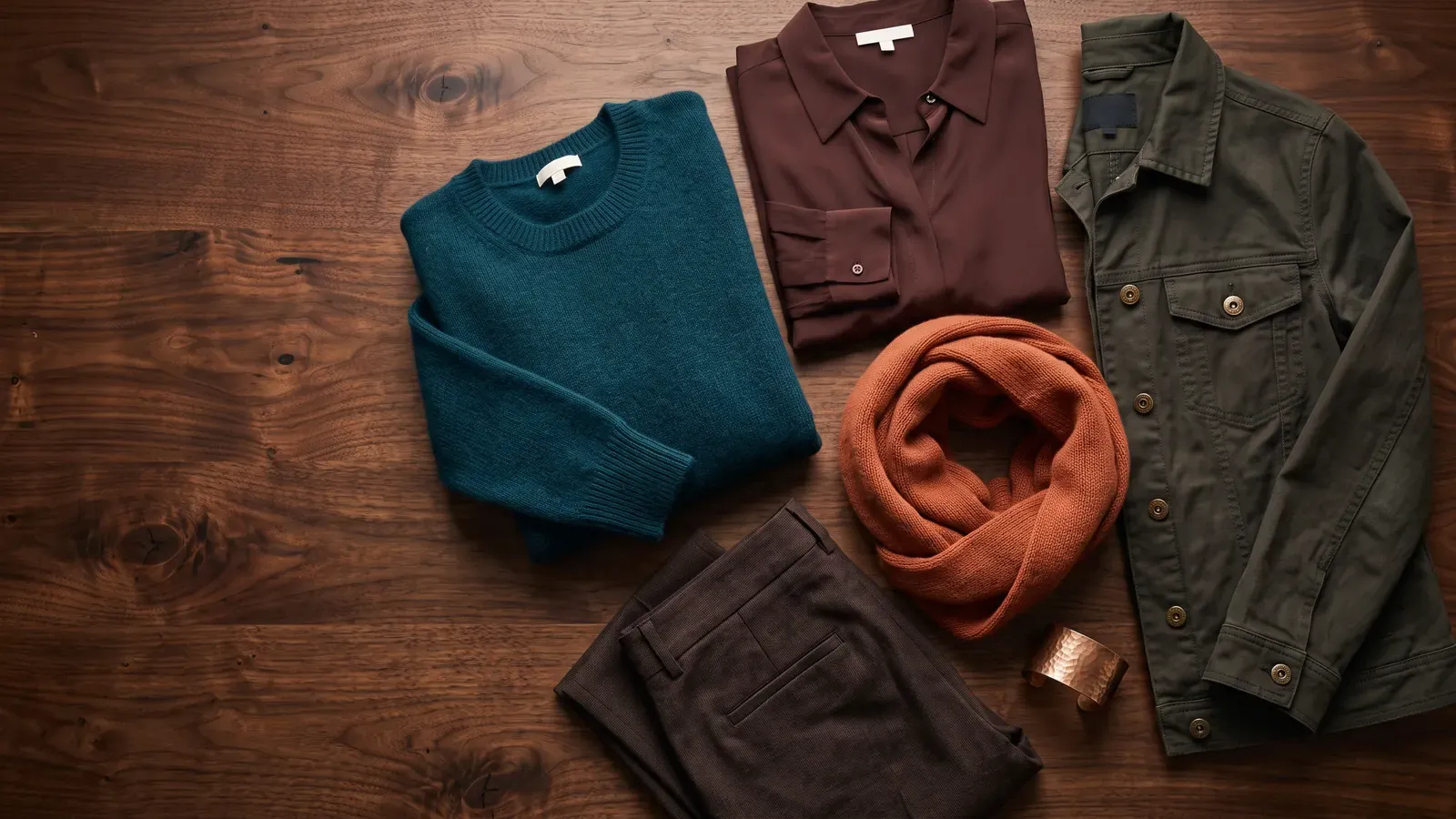
Deep Autumn
Signature colors
- Deep Rust
- Forest Green
- Burgundy
- Dark Mustard
- Deep Teal
Skip
- Black#000000
- Mint#A9E3C9
- Bright Blush#FFC7CA
- Cornflower#6B8DD8
- Magenta#C2009C
- Pale Turquoise#ADE8E3
Each of these two seasons lives in autumn's neutral warm zone, and bronze jewelry flatters them both.
Both belong to the warm, earthy autumn family. Soft Autumn flatters gentle, muted shades, and Deep Autumn flatters dark, rich ones.
- What decides it: how deep your features are
- Soft Autumn: medium depth, paired with soft colors
- Deep Autumn: deep, paired with medium-clear colors
- What they have in common: neutral warmth and bronze jewelry
The one trait that tells them apart
Depth describes whether your hair, eyes and skin read light or dark when taken together. Soft Autumn sits at medium depth, and Deep Autumn sits at deep. That is the main gap between these two seasons.
Clarity comes next. It tells you whether clear, bright colors or soft ones work better next to your face. Soft Autumn calls for muted, gentle shades. Deep Autumn can carry colors that are somewhat richer and more defined.
Soft Autumn is the most delicate of the warm seasons. It blends muted earthy tones with a hint of cool Summer softness, so the overall contrast stays low. Deep Autumn is the darkest of the warm seasons, and its rich, earthy palette suits warm skin with deep hair and eye color.
Muted Autumn and Dark Autumn: two names for the same seasons
Soft Autumn also goes by Muted Autumn, and Deep Autumn also goes by Dark Autumn. Some guides pick one pair of names, some pick the other. The colors stay the same, and so does the test.
Testing the two looks at home in daylight
Indoor lighting and phone cameras both shift skin color, so daylight and a mirror tell you more than a selfie will. Find two tops, or two fabric swatches: one soft oatmeal, one dark chocolate brown.
- Stand by a window in the daytime with a mirror, so your face gets natural light.
- Hold the oatmeal fabric just below your chin and let your eyes rest on your whole face for a few moments.
- Change to the dark chocolate brown and look at the same spot again.
- Switch back and forth several times, since the contrast shows up best when you keep swapping.
You can also compare gold with silver, and black with dark brown. Both seasons suit bronze, and dark brown is usually gentler than black on either. If even dark chocolate looks heavy on you, that points to Soft Autumn.
What to look for in the mirror
Pay attention to the area beneath your eyes and along your jaw. Colors that are too dark for you will throw heavy shadows there. Colors that are too light can wash you out or make your skin look gray.
When a color is right, your skin looks even. Your face is what you notice first, not the fabric.
The deciding question stays simple: which looks better under your chin, soft oatmeal or dark chocolate brown? When oatmeal evens out your skin while chocolate brown brings shadows, you lean Soft Autumn. When chocolate brown defines your face and oatmeal washes you out, you lean Deep Autumn.
Signs that Soft Autumn is yours
- Soft oatmeal and dusty olive flatter your skin, but deep chocolate brown throws heavy shadows across your face.
- Black worn near the face feels heavy and pulls shadows out from under your eyes.
- Pure white reads as harsh, while cream and tan even out your skin.
- Loud neon shades wear you instead of the other way around, drawing attention to the fabric rather than to you.
- Brushed gold and bronze settle gently into your skin, while bright silver feels cold.
- Soft greens such as sage and olive sharpen your eyes straight away.
Sage, dusty terracotta, rose brown, soft mustard and soft teal make up your signature shades. Mushroom is your best neutral. The shades to avoid include black, magenta, bright cobalt, fuchsia, deep royal blue and burgundy.
Signs that Deep Autumn fits you
- Deep chocolate brown and deep pine sharpen your features, while oatmeal leaves you looking faded.
- Pure black reads a touch harsh on you, while deep chocolate brown gentles your skin.
- Icy pastels such as baby pink or mint leave your face sallow and weary.
- Antique gold and bronze melt into your skin, while bright silver just sits there.
- Deep terracotta, rust and olive green wake up your eyes and balance your skin tone.
- Stark white drains you, while cream sits naturally against your face.
Deep rust, forest green, burgundy, dark mustard and deep teal make up your signature shades. Espresso is your best neutral. The shades to avoid include black, mint, bright blush, cornflower, magenta and pale turquoise.
Soft Autumn and Deep Autumn side by side
| Soft Autumn | Deep Autumn | |
|---|---|---|
| Temperature | Neutral, warm-leaning | Neutral, warm-leaning |
| How deep | Medium | Deep |
| How clear | Soft | Medium |
| Metal picks | Brushed gold, bronze | Antique gold, bronze |
| Top neutral | Mushroom | Espresso |
| Burgundy | Skip it | Signature color |
What the two looks have in common
Both sit on autumn's neutral warm side, and bronze jewelry flatters both. Neither one wears black well near the face. Cream also suits both seasons better than stark white does.
Burgundy is where the two part ways most clearly. It is a signature color for Deep Autumn, while Soft Autumn should skip it.
Still between the two seasons?
Treat a quiz as a starting point, not a final word. If you're unsure, try oatmeal and dark chocolate brown under your chin again in daylight, or confirm your result with an in-person draping session.
When you want something more certain, a draping session can settle it. In a draping session, a consultant holds different colored fabrics under your chin, one after another, and watches how your face changes with each.
The site's undertone test or its gold or silver test can tell you more about the warm side of your coloring. Every season palette lists 60 named colors with HEX codes, so the two palettes are easy to line up side by side.
Common questions
Can I have dark brown hair and still be Soft Autumn?
Hair is only one clue. Look at how your hair, eyes and skin read together, then try the oatmeal and chocolate brown test in daylight. See which one keeps your skin looking even.
Can I have green or hazel eyes and be Deep Autumn?
Your eye color is just one piece of your depth. What matters more is how deep your features read as a set, and how your face changes with deep pine or dark chocolate brown. When those shades give your face definition, Deep Autumn is the better fit.
What do I get with each palette?
Every palette includes 60 named colors with HEX codes in three groups: neutrals, main colors and accents. Colors to avoid are listed too. A free PNG palette card, a CSV of HEX codes, Adobe ASE swatches, Procreate swatches in two files, or a zip with all 12 seasons are all available to download.
Is a photo required to find my season?
No. There is no photo, no upload, no camera, no email and no account. The quiz asks three questions covering temperature, depth and clarity, and everything you answer stays right in your browser.