
Skin tone chart
A skin tone chart is a simple grid that sorts skin by how light or dark it is, from the palest end of the range to the deepest, and by undertone, the quiet color that lives under the surface.
Skin tone chart by depth and undertone
| Depth | Cool | Warm | Neutral | Olive |
|---|---|---|---|---|
| Fair | #F6E2D8 | #F7E3CC | #EFE0CF | #E9DCC3 |
| Light | #ECC9B8 | #EEC8A4 | #E3C3A8 | #D9C39F |
| Medium | #D3A28A | #D6A77C | #C9A084 | #BFA078 |
| Tan | #B07A63 | #B98559 | #A97F60 | #9C7F58 |
| Deep | #7D4F40 | #875A39 | #7A5843 | #6E573C |
| Rich | #4E3029 | #5A3A26 | #4F3A2E | #463A2B |
The squares are examples. Screens shift color, so find your row by depth first, then your column with the undertone checks.
Not sure where you sit? Take the skin tone quiz
Find your column: four undertone checks
Do each check in daylight. The column that collects most of your answers is your undertone.
| Check | Cool | Warm | Neutral | Olive |
|---|---|---|---|---|
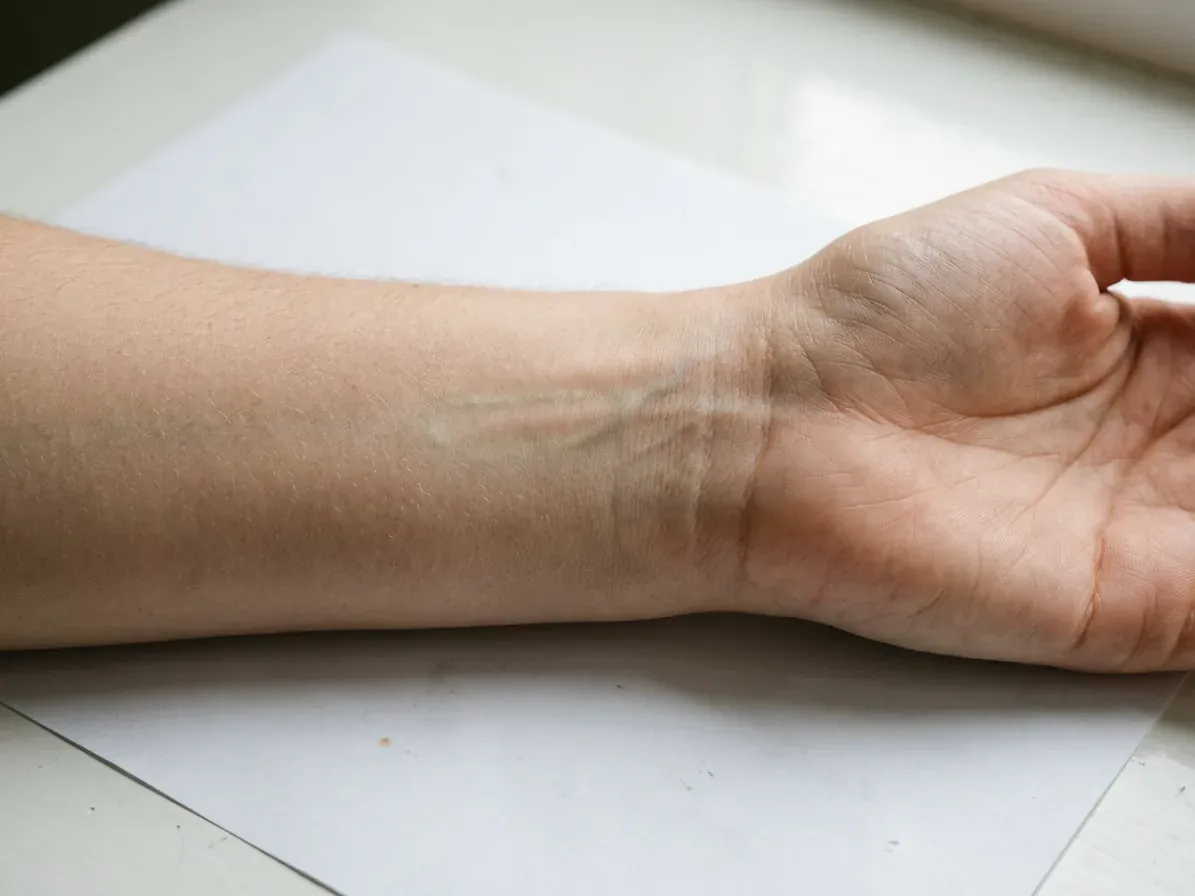
| Veins on the inner wrist | Blue or purple | Green or olive | A mix of both | Green with a grey cast |
| Jewelry that flatters | Silver, platinum | Gold, brass, copper | Both | Gold, antique brass |
| Next to white paper | Pink or rosy | Yellow or peachy | Hard to say | Green or grey |
| In the sun | Burns, turns pink | Tans golden | Both | Tans easily |
From your column to your season
Your row (depth) then narrows it: fair and light rows lean to the light seasons, tan to rich rows to the deep ones. The season quiz adds the third trait, bright or soft.
With a few minutes in daylight, you can find your square. The rows run from fair to light, medium, tan, deep and rich. The columns show four undertones: cool, warm, neutral and olive.
How to use the skin color chart
Every row stands for depth, meaning how light or dark your skin appears. Every column stands for undertone, the warm, cool, neutral or olive cast that sits beneath the surface.
Begin with the row that matches your depth, then find the column whose cast looks most like yours. One square is all you need to pick.
Your surface shade shifts through the year, growing darker in summer and lighter in winter.
Finding your square in daylight
Bulbs indoors throw yellow or blue light over your skin, and that distorts how bare skin reads. Daylight gives a truer match.
- Start fresh, with a clean face and no makeup, so your natural shade has nothing hiding it.
- Find a spot near a window where the daylight is soft and indirect, so no shadow masks your true shade.
- Bring your screen up beside your jawline, or check it against your inner arm, a spot where you don't tan.
- Choose your row, then look through the 4 columns for the cast that fits best.
Olive skin tone
Olive skin carries a faint green or gray cast blended into a yellow base beneath the surface. It isn't a matter of how light or dark you are, so someone very fair and someone very deep can both be olive.
That is why olive appears as a column rather than a row.
How do depth and undertone reveal your season?
Our 12 seasons grow out of four main groups: spring, summer, autumn and winter. Every group then splits into three seasons, each one named after its most noticeable quality, which might be anything from light or warm to bright, soft or deep.
Your column tells you your temperature. Cool columns belong with summer or winter, and warm columns belong with spring or autumn.
Your row shows your depth, how light or dark your skin is. Together with your hair and eyes, it helps the quiz tell whether a light, medium or deep palette suits you best.
Our home quiz walks you through 3 quick questions: whether gold or silver suits you, whether your features read light, medium or deep, and whether clear or muted colors work near your face. It then points you to one of the 12 seasons and its palette. No photo is taken, and your answers never leave your browser. Treat the quiz as a first step; checking yourself in a mirror by daylight, or having fabrics draped on you in person, can confirm the result.
Questions people often ask
Why is my face a different shade from my neck?
Your face sits in sunshine more than the rest of you. Instead of matching flushed cheeks, pick colors from your jawline or chest.
Is the wrist vein test a reliable guide?
Not really, since the thickness of your skin alters the way veins appear. You will get a much clearer read on which colors lift your complexion by holding fabrics up to your bare face in daylight.
Why do foundation labels sometimes seem wrong?
Brands frequently confuse how deep a shade is with what undertone it carries. Depth and undertone are separate, so deep skin can be warm, cool, neutral or olive. Use the chart's columns to judge your undertone rather than trusting a label.