
Deep Autumn vs Deep Winter
Deep autumn vs deep winter comes down to one trait: both suit deep colors, but Deep Autumn leans warm and Deep Winter leans cool.
The one test that settles it
Which one makes you look fresher, pure jet black or dark chocolate brown?
You're Deep Autumn if bronze and dark brown give your skin warmth while pure black brings out shadows under your eyes.
You're Deep Winter if silver and jet black make your features appear sharper while dark brown goes muddy next to your face.
Deep Autumn and Deep Winter side by side
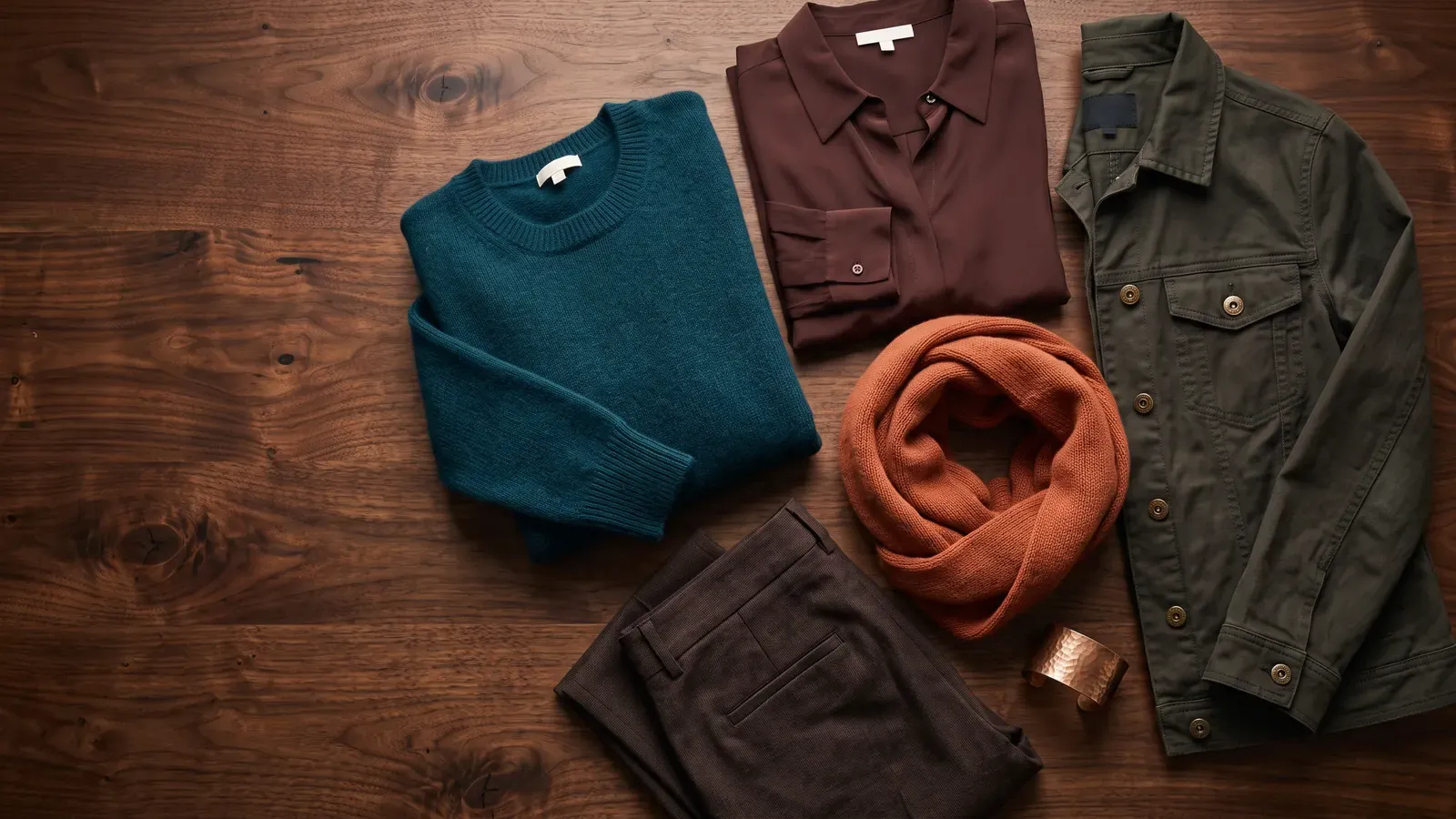
Deep Autumn
Signature colors
- Deep Rust
- Forest Green
- Burgundy
- Dark Mustard
- Deep Teal
Skip
- Black#000000
- Mint#A9E3C9
- Bright Blush#FFC7CA
- Cornflower#6B8DD8
- Magenta#C2009C
- Pale Turquoise#ADE8E3
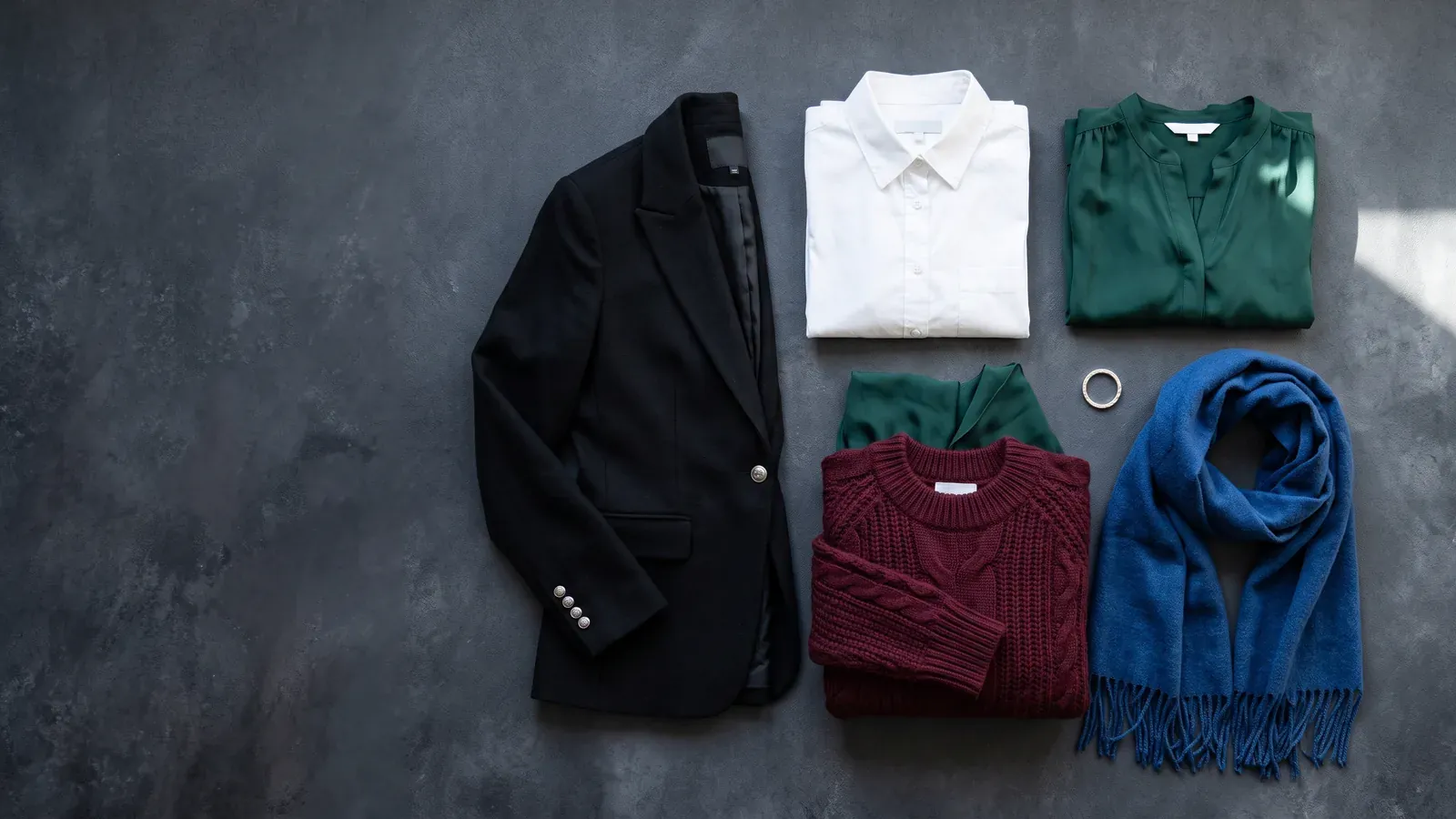
Deep Winter
Signature colors
- Deep Burgundy
- Deep Emerald
- Dark Violet
- Deep Cherry
- Sapphire
Skip
- Bright Copper#D56400
- Pale Coral#FFC4B5
- Soft Coral#DA8F7C
- Dusty Apple Green#90B07F
- Mahogany#742F25
Both seasons get washed out by pale pastels and need rich, dark shades close to the face.
Both seasons are dark, so the fastest check is finding out whether you look better in dark chocolate brown or in true jet black.
- The test that settles it: dark chocolate brown or pure jet black held under your chin
- Metals for Deep Autumn: antique gold, bronze
- Deep Winter's metals: gunmetal, platinum and silver
- Neutral that works best: Espresso on Deep Autumn, Black on Deep Winter
What sets them apart?
Temperature describes which way your coloring goes, toward golden warmth or toward silvery coolness. Deep Autumn is a neutral season that tips warm, and Deep Winter is a neutral season that tips cool. What they have in common is their main trait, depth: deep eyes, deep hair and rich features.
There is one more small difference. Clarity is about whether the colors that suit you are bright or soft. Deep Autumn lands in the middle on this, while Deep Winter looks best in bright colors and high contrast.
| Deep Autumn | Deep Winter | |
|---|---|---|
| Temperature | Neutral, warm side | Neutral, cool side |
| Depth | Dark | Dark |
| Clarity | In between | Bright |
| Metals | Bronze and antique gold | Gunmetal, platinum, silver |
| Best neutral | Espresso brown | True black |
Checking yourself in daylight
Daylight and a mirror show you more than a selfie does, since phone cameras and indoor lighting both change how skin looks.
- Find a spot near a window where daylight falls on your face naturally, and keep a mirror with you.
- Hold something dark chocolate brown, a top or a piece of fabric, under your chin and study your face for a moment.
- Replace it with something pure jet black and compare.
- Put on antique gold jewelry, then silver, and notice which one sits well with your skin.
Pay attention to your skin, not the fabric. Check for shadows under your eyes, any gray or muddy tone, and whether your skin looks even.
If dark brown and bronze warm up your skin while pure black gives you shadows under your eyes, you are Deep Autumn. If jet black and silver make your features look sharper while dark brown looks muddy near your face, you are Deep Winter.
How to tell Deep Autumn suits you
Deep Autumn is the darkest of the warm seasons, built from rich, earthy shades that go with deep eyes, deep hair and warm skin.
- Pure black can look a bit harsh on you, while dark chocolate brown softens your skin.
- Baby pink, mint and other icy pastels leave your face looking dull and worn out.
- Antique gold and bronze jewelry blend smoothly with your skin, while bright silver seems to sit on top of it.
- Terracotta, rust and olive green in rich shades lift your eyes and help your skin tone look even.
- Stark white drains you, while cream looks right against your face.
Your core shades are the deep, warm ones: think rust, forest green, burgundy, a dark mustard and a deep teal. As for the ones to pass over, skip black, mint, bright blush, cornflower, magenta and pale turquoise.
How to tell Deep Winter suits you
Deep Winter is a cool, dark season for people who are at their best in rich, shadowy colors worn with high contrast.
- Black placed right under your chin leaves your skin looking clear and smooth.
- Light pastels drain the color from your face and leave you looking pale.
- Shades like a warm orange or a golden brown tend to pull yellow or muddy tones out in your skin.
- A lipstick in a dark berry shade brightens your whole face without ever reading as too much makeup.
- Jewelry in silver and dark gunmetal flatters your skin more than yellow gold does.
When you want your strongest colors, go for the deep, cool end of things: burgundy, emerald, violet, cherry and sapphire. The ones that will not do you any favors are bright copper, pale coral, soft coral, a dusty apple green and mahogany.
About the names Dark Autumn and Dark Winter
These are just two other names for the same seasons. Dark Autumn means Deep Autumn and Dark Winter means Deep Winter, so the test is the same and so are the palettes.
What the two seasons share
Both seasons are happiest with rich, dark colors worn near the face. Both can look washed out in pale pastels, even though the colors each season avoids are different.
They are also neighbors in the 12 season system. The 4 families each divide into 3 seasons named after their strongest trait, and both of these get their label from how deep they are.
Not sure yet?
A quiz can only take you so far. Try the brown and black test again on another day in daylight. A draping session in person, where a stylist holds fabrics up to your face, can confirm the answer.
The home quiz asks 3 questions, one on each screen: gold or silver, whether your features are light, medium or deep, and whether colors near your face should be bright or soft. There is no photo to send, nothing to upload and no account to make, and everything you answer stays right in your browser. If you're still between the two, the site's free undertone test and gold or silver test both look at temperature, which is the trait that sets these seasons apart.
Questions people ask
Does hair color matter?
Hair color is one more clue, since both seasons are deep. The site's free hair color quiz can help you look at that.
Do the palettes work in design apps?
Yes. Every season comes with 60 named colors and HEX codes across neutrals, main colors and accents, along with the shades to steer clear of. All the downloads cost nothing: you can grab a palette card as a PNG, the HEX values as a CSV, swatch files for Adobe or Procreate, or one archive bundling every one of the 12 seasons.